PM’s remarks at the 102nd Indian Science Congress

Published By : Admin | January 3, 2015 | 19:05 IST
"PM: calls for efforts to ensure that science, technology and innovation reach the poorest, the remotest and the most vulnerable person"
"PM: We must restore the pride and prestige of science and scientists in our nation"
"प्रधानमंत्री: सबसे गरीब, सबसे दूर-दराज के और सर्वाधिक कमजोर व्यक्ति तक विज्ञान, प्रौद्योगिकी तथा नवाचार की पहुंच सुनिश्चित करने के प्रयासों का आह्वान"
"प्रधानमंत्री: हमें अपने राष्ट्र में विज्ञान और वैज्ञानिकों का गौरव एवं प्रतिष्ठा बहाल करनी ही होगी"

The Prime Minister, Shri Narendra Modi, has called for efforts to ensure that science, technology and innovation reach the poorest, the remotest and the most vulnerable person. He said that for a prosperous future for India, we need to put science, technology and innovation at the top of national priorities. In his address to the 102nd Indian Science Congress in Mumbai today, the Prime Minister said more resilient agriculture, appropriate and affordable technologies for rural areas, improving healthcare, making clean technology affordable, and making India a leading manufacturing nation and a hub for knowledge and technology-intensive industries, were some of the key objectives before Indian scientists.

684-102indian scince congress (3) The Prime Minister said a nation`s progress and its human development are linked to science and technology. He added that China`s emergence as the second biggest global economy is in parallel to its rise to the second place in science and technology activities.

The Prime Minister said, that a discussion on science and human development, cannot be divorced from the questions of political decisions; social choices; and of equity, ethics and access. He said human development has been the larger purpose and the driving force of India`s scientific pursuits, and science has helped shape modern India.

The Prime Minister appreciated Indian scientists for rising to the occasion “whenever the world shut its door on us.” He said that when the world sought our collaboration, they reached out with the openness that is inherent in our society. He also lauded Indian scientists for putting Mangalyaan in the Mars orbit in the first attempt, and saving thousands of lives through their accurate prediction of Cyclone Hudhud.

684-102indian scince congress (2)

The Prime Minister said that when he speaks of ease of doing business in India, he also wants to pay equal attention to the ease of doing research and development in India. He said funding proposals must not take too long to clear, and scientific departments must have flexibility of funding decisions based on the uncertainties inherent in research activities. He also called for clear regulatory policies for research and development in areas like biotechnology, nanoscience, agriculture and clinical research.

The Prime Minister said each government department should have an officer focusing on science and technology relating to its area of work; and, allocate a percentage of its budget for such activities. “We have to place the university system at the cutting edge of the research and development activities in the country,” he added. He said universities must be freed from the clutches of excessive regulation and cumbersome procedures.

684-102indian scince congress (1)

The Prime Minister called upon Indian industry to step up investments in science and technology in its own interest. He said India`s own pharmaceutical industry has carved out a place for itself in the world, because it invests significantly in research.

He welcomed the initiatives of Department of Science and Technology for involving thousands of children and youth in science and technology.

The Prime Minister said India must “restore the pride and prestige of science and scientists in our nation; revive the romance for science in society; rekindle the love for it in our children; and, encourage our scientists - to dream, imagine and explore.”

The Prime Minister began his address by paying homage to eminent scientist Vasant Gowarikar, who passed away recently.

Click here to read full text speech.

Explore More
Today, the entire country and entire world is filled with the spirit of Bhagwan Shri Ram: PM Modi at Dhwajarohan Utsav in Ayodhya

Popular Speeches

Today, the entire country and entire world is filled with the spirit of Bhagwan Shri Ram: PM Modi at Dhwajarohan Utsav in Ayodhya
Regional languages take precedence in Lok Sabha addresses

Media Coverage

Regional languages take precedence in Lok Sabha addresses
NM on the go

Nm on the go

Always be the first to hear from the PM. Get the App Now!
...
Cabinet approves three new corridors as part of Delhi Metro’s Phase V (A) Project
December 24, 2025

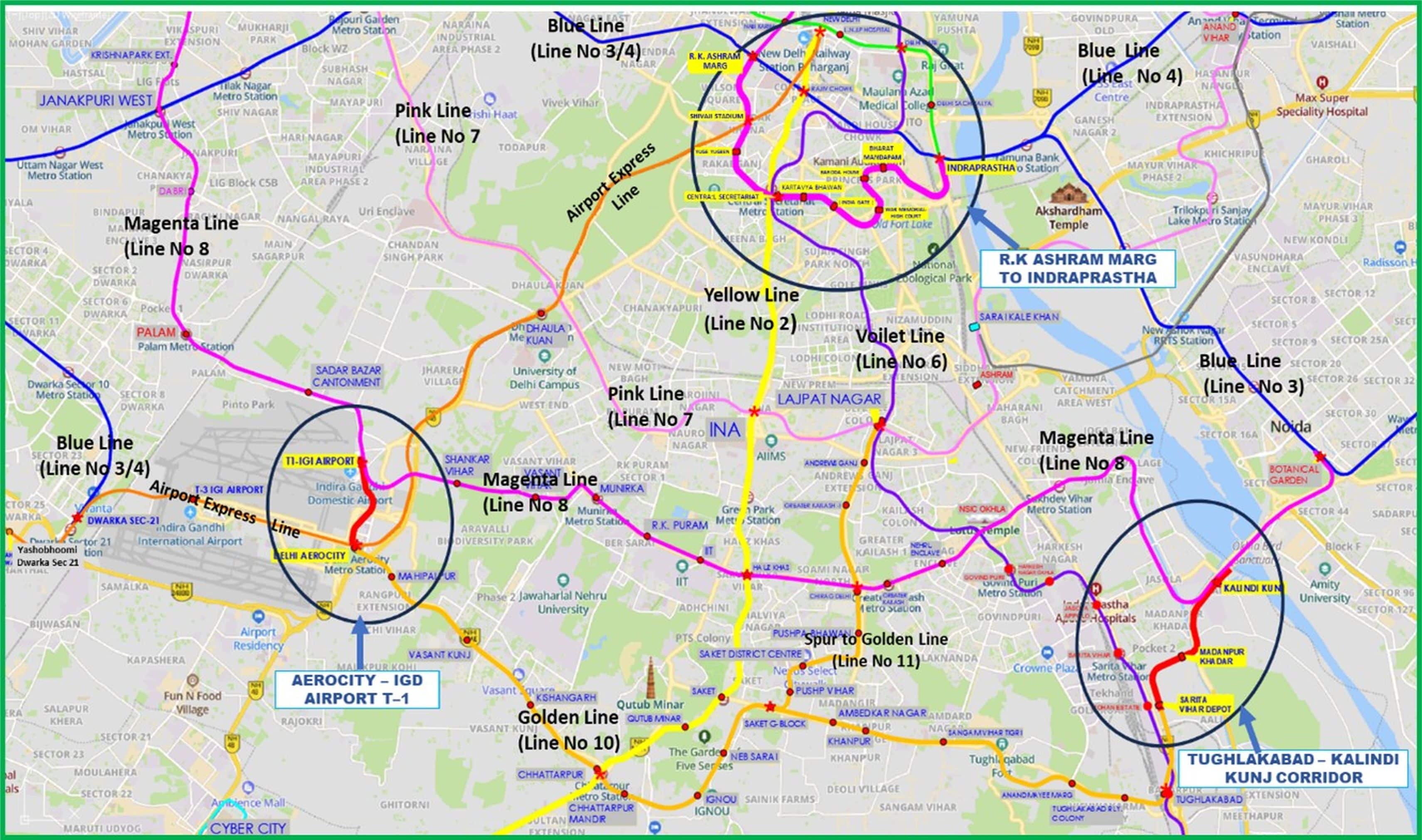
The Union Cabinet chaired by the Prime Minister, Shri Narendra Modi has approved three new corridors - 1. R.K Ashram Marg to Indraprastha (9.913 Kms), 2. Aerocity to IGD Airport T-1 (2.263 kms) 3. Tughlakabad to Kalindi Kunj (3.9 kms) as part of Delhi Metro’s Phase – V(A) project consisting of 16.076 kms which will further enhance connectivity within the national capital. Total project cost of Delhi Metro’s Phase – V(A) project is Rs.12014.91 crore, which will be sourced from Government of India, Government of Delhi, and international funding agencies.

The Central Vista corridor will provide connectivity to all the Kartavya Bhawans thereby providing door step connectivity to the office goers and visitors in this area. With this connectivity around 60,000 office goers and 2 lakh visitors will get benefitted on daily basis. These corridors will further reduce pollution and usage of fossil fuels enhancing ease of living.

Details:

The RK Ashram Marg – Indraprastha section will be an extension of the Botanical Garden-R.K. Ashram Marg corridor. It will provide Metro connectivity to the Central Vista area, which is currently under redevelopment. The Aerocity – IGD Airport Terminal 1 and Tughlakabad – Kalindi Kunj sections will be an extension of the Aerocity-Tughlakabad corridor and will boost connectivity of the airport with the southern parts of the national capital in areas such as Tughlakabad, Saket, Kalindi Kunj etc. These extensions will comprise of 13 stations. Out of these 10 stations will be underground and 03 stations will be elevated.

After completion, the corridor-1 namely R.K Ashram Marg to Indraprastha (9.913 Kms), will improve the connectivity of West, North and old Delhi with Central Delhi and the other two corridors namely Aerocity to IGD Airport T-1 (2.263 kms) and Tughlakabad to Kalindi Kunj (3.9 kms) corridors will connect south Delhi with the domestic Airport Terminal-1 via Saket, Chattarpur etc which will tremendously boost connectivity within National Capital.

These metro extensions of the Phase – V (A) project will expand the reach of Delhi Metro network in Central Delhi and Domestic Airport thereby further boosting the economy. These extensions of the Magenta Line and Golden Line will reduce congestion on the roads; thus, will help in reducing the pollution caused by motor vehicles.

The stations, which shall come up on the RK Ashram Marg - Indraprastha section are: R.K Ashram Marg, Shivaji Stadium, Central Secretariat, Kartavya Bhawan, India Gate, War Memorial - High Court, Baroda House, Bharat Mandapam, and Indraprastha.

The stations on the Tughlakabad – Kalindi Kunj section will be Sarita Vihar Depot, Madanpur Khadar, and Kalindi Kunj, while the Aerocity station will be connected further with the IGD T-1 station.

Construction of Phase-IV consisting of 111 km and 83 stations are underway, and as of today, about 80.43% of civil construction of Phase-IV (3 Priority) corridors has been completed. The Phase-IV (3 Priority) corridors are likely to be completed in stages by December 2026.

Today, the Delhi Metro caters to an average of 65 lakh passenger journeys per day. The maximum passenger journey recorded so far is 81.87 lakh on August 08, 2025. Delhi Metro has become the lifeline of the city by setting the epitome of excellence in the core parameters of MRTS, i.e. punctuality, reliability, and safety.

A total of 12 metro lines of about 395 km with 289 stations are being operated by DMRC in Delhi and NCR at present. Today, Delhi Metro has the largest Metro network in India and is also one of the largest Metros in the world.