Gujarat opts for Green Energy Today, Greener World Tomorrow

Published By : Admin | April 9, 2013 | 11:54 IST


Gujarat shows the way by focussing extensively on renewable energy


Under the visionary leadership of Shri Modi, Gujarat first state in India and entier Asia to set up climate change department


Gujarat shines in creation of solar energy and wind energy


by Dr. Nirav Shah As we move into a smarter and faster world, full of innovations and technology, we also face perils of rapidly depleting sources of energy and pernicious ramifications on the environment. The entire world has been working hard to reduce the use of conventional sources of energy and adopt cleaner and greener sources. India, with its population has a major responsibility to contribute to this antecedent by reducing its carbon footprint. Gujarat, luckily has the benefit of Shri Narendra Modi’s foresight. One of the very few national leaders to understand the gravity of the situation, Narendra Modi has catapulted Gujarat into unchartered territory by focussing extensively on renewable sources of energy. Shri Narendra Modi has written a very insightful book called Convenient Action addressing the concerns of Climate change. Gujarat Government , under the able leadership of Shri Narendra Modi is the first state in India and Asia to set up a Department for Climate Change.             


Source: Energy Statistics 2012 (CSO)

Gujarat’s progress in the field of renewable sources of energy emphasises the importance of a sound policy and the will to implement it. Starting with negligible advancements in renewable sources of energy, Gujarat has achieved a remarkable turnaround under Shri Narendra Modi and dominates the production of renewable energy today. According to the Annual Report ‘Energy Statistics 2012’ published by Central Statistics Office, Gujarat potentially accounts for 14% of the total Renewable Energy Power generated in India, which is more than the larger states of India as explained by the table above. In addition to this, Gujarat also generates a large chunk of the total Solar  Energy generated in the country. According to the Monthly Generation Report (August 12)  Published by Central Electricity Authority, Gujarat produced 400.196 MU of the total 539.205 MU produced between April and August 2012. Thus, Gujarat produced an astonishing 74.21% of the total solar energy produced by the nation.         


The Government of Gujarat, under Narendra Modi has undertaken many unique endeavours to ameliorate the generation of energy from renewable sources. Gujarat has shown exemplary vision and set up a 600 MW solar park at Charanka near Patan. It is a matter of great pride for Gujarat and India, that this is park, situated on approximately 2669 acres of waste land , is the largest of its kind in entire Asia! The picture of Shri Narendra Modi in the backdrop of the solar panels would remain permanently etched in our minds. The Government further gave a fillip to the generation of solar energy by involving the citizens with roof top solar power plant . This solar energy thus generated can be sold to the government and act as an additional source of income. This clean energy, in addition to supplementing the various other sources of energy and enriching the lives of people, would also help reduce lakhs of tonnes of Carbon Dioxide emissions. Another glaring example of the out of the box thinking of the government is the solar panels on canals project. Employing a very holistic approach, solar panels are set on top of canals, thus eliminating the need to procure land. Huge amounts of water evaporation can be prevented, in addition to generating electricity. It is a welcome change to see an Indian state spearheading a revolution of innovations and reform. 

Not limiting itself to one source of alternative energy, the State Government is always on the hunt for new avenues to expand the domain of renewable power in Gujarat. As is the case with solar energy, Gujarat is one of the major producers of Wind Energy in India. Recognising the potential of wind energy and exhibiting proactive measures, Gujarat increased it’s wind energy generation ten folds in the last six years. Isn’t it an amazing growth story in a nation renowned for its bureaucratic roadblocks? Gujarat has also made significant advances in the field of bio energy as well. But, unlike anyone, Narendra Modi , is a man with an indefatigable zeal to keep pushing the envelope of excellence. Instead of getting satisfied with the progress achieved, believe him to use this as propeller to achieve further heights. Today, Gujarat is at par with the western world in harnessing nature to generate energy. Just imagine what heights can we as a nation, abundantly blessed with natural resources, achieve if it follows the Gujarat Model?

References:

Explore More
Today, the entire country and entire world is filled with the spirit of Bhagwan Shri Ram: PM Modi at Dhwajarohan Utsav in Ayodhya

Popular Speeches

Today, the entire country and entire world is filled with the spirit of Bhagwan Shri Ram: PM Modi at Dhwajarohan Utsav in Ayodhya
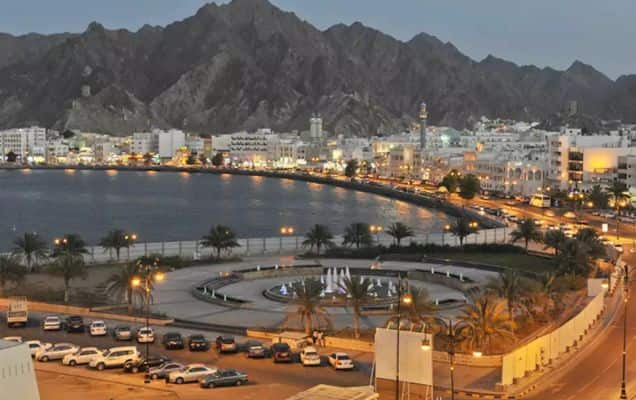
Oman, India’s Gulf 'n' West Asia Gateway

Media Coverage

Oman, India’s Gulf 'n' West Asia Gateway
NM on the go

Nm on the go

Always be the first to hear from the PM. Get the App Now!
...
6 Years of Jal Jeevan Mission: Transforming Lives, One Tap at a Time
August 14, 2025
Jal Jeevan Mission has become a major development parameter to provide water to every household.” - PM Narendra Modi

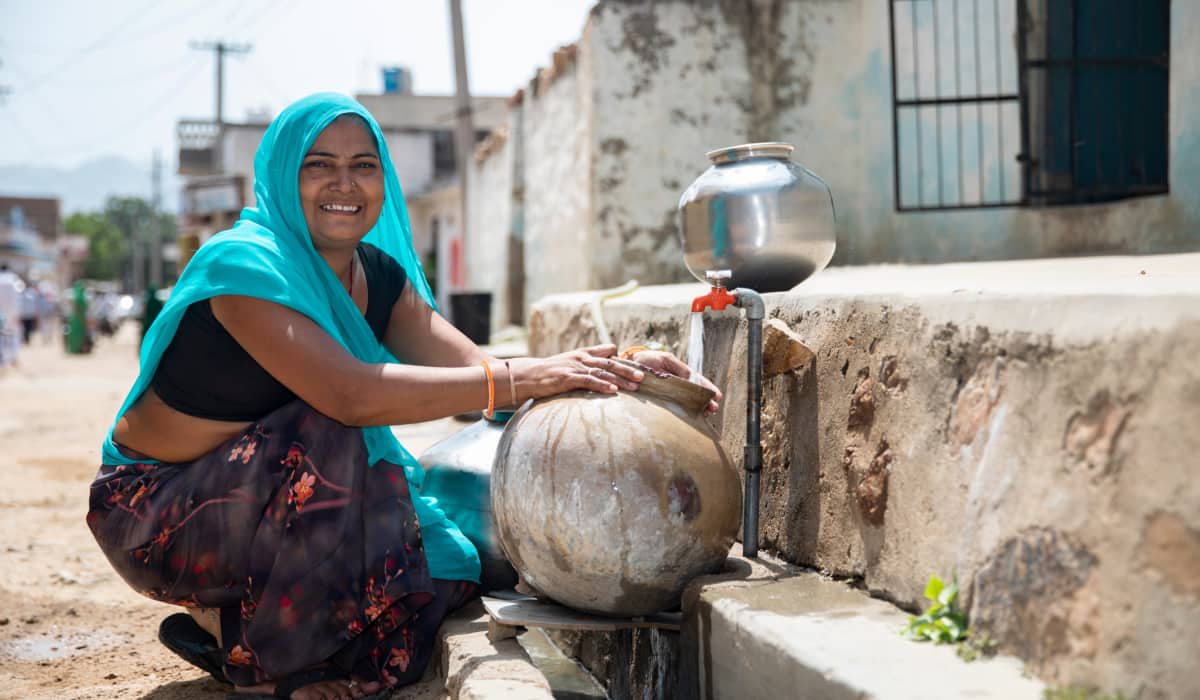
For generations, the sight of women carrying pots of water on their heads was an everyday scene in rural India. It was more than a chore, it was a necessity that was an integral part of their everyday life. The water was brought back, often just one or two pots which had to be stretched for drinking, cooking, cleaning, and washing. It was a routine that left little time for rest, education, or income-generating work, and the burden fell most heavily on women.

Before 2014 water scarcity, one of India’s most pressing problems, was met with little urgency or vision. Access to safe drinking water was fragmented, villages relied on distant sources, and nationwide household tap connections were seen as unrealistic.

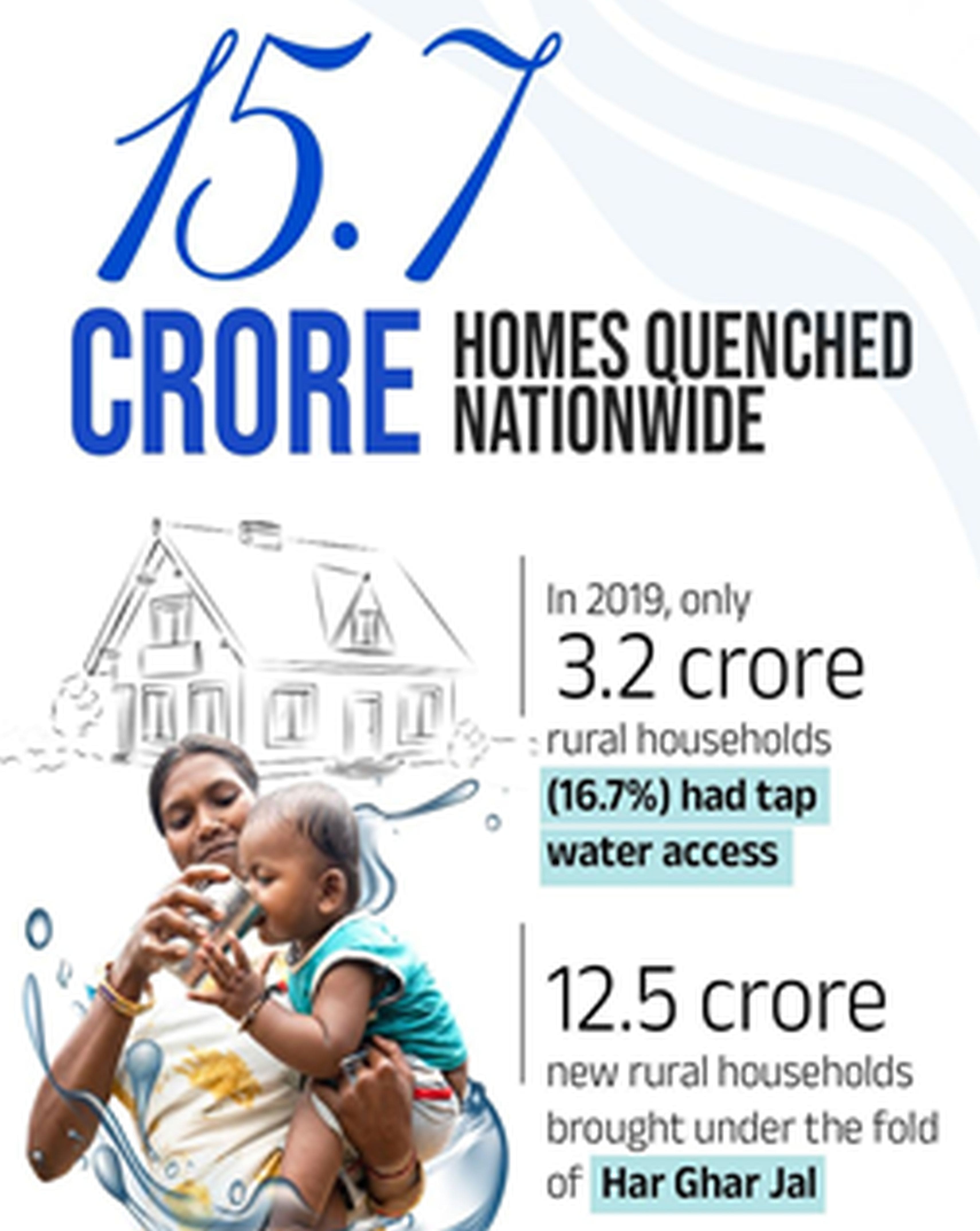
This reality began to shift in 2019, when the Government of India launched the Jal Jeevan Mission (JJM). A centrally sponsored initiative which aims at providing a Functional Household Tap Connection (FHTC) to every rural household. At that time, only 3.2 crore rural households, a modest 16.7% of the total, had tap water. The rest still depended on community sources, often far from home.

As of July 2025, the progress under the Har Ghar Jal program has been exceptional, with 12.5 crore additional rural households connected, bringing the total to over 15.7 crore. The program has achieved 100% tap water coverage in 200 districts and over 2.6 lakh villages, with 8 states and 3 union territories now fully covered. For millions, this means not just access to water at home, but saved time, improved health, and restored dignity. Nearly 80% of tap water coverage has been achieved in 112 aspirational districts, a significant rise from less than 8%. Additionally, 59 lakh households in LWE districts have gained tap water connections, ensuring development reaches every corner. Acknowledging both the significant progress and the road ahead, the Union Budget 2025–26 announced the program’s extension until 2028 with an increased budget.

The Jal Jeevan Mission, launched nationally in 2019, traces its origins to Gujarat, where Narendra Modi, as Chief Minister, tackled water scarcity in the arid state through the Sujalam Sufalam initiative. This effort formed a blueprint for a mission that would one day aim to provide tap water to every rural household in India.

Though drinking water is a State subject, the Government of India has taken on the role of a committed partner, providing technical and financial support while empowering States to plan and implement local solutions. To keep the Mission on track, a strong monitoring system links Aadhaar for targeting, geo-tags assets, conducts third-party inspections, and uses IoT devices to track village water flow.

The Jal Jeevan Mission’s objectives are as much about people as they are about pipes. By prioritizing underserved and water-stressed areas, ensuring that schools, Anganwadi centres, and health facilities have running water, and encouraging local communities to take ownership through contributions or shramdaan, the Mission aims to make safe water everyone’s responsibility..

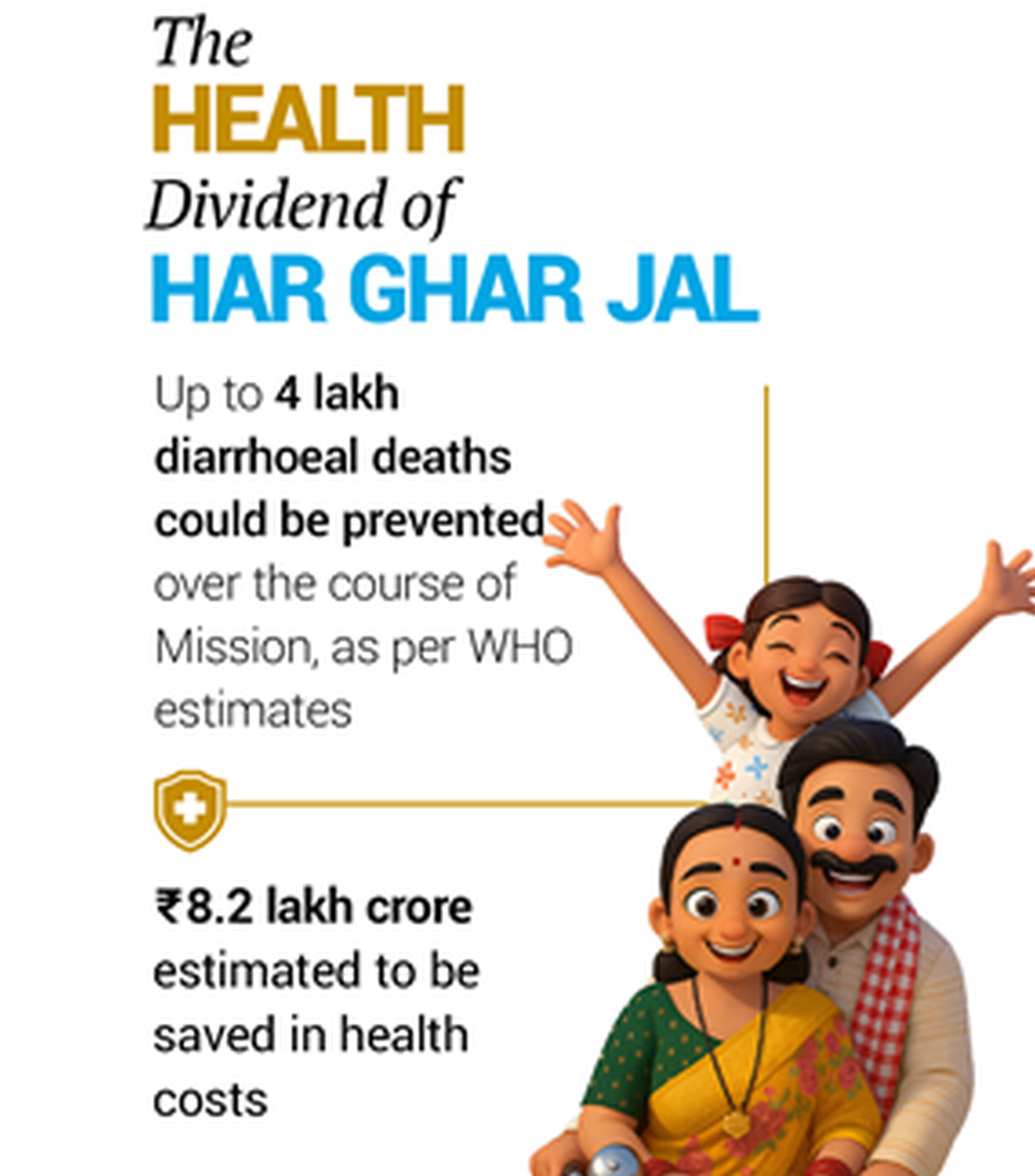
The impact reaches far beyond convenience. The World Health Organization estimates that achieving JJM’s targets could save over 5.5 crore hours each day, time that can now be spent on education, work, or family. 9 crore women no longer need to fetch water from outside. WHO also projects that safe water for all could prevent nearly 4 lakh deaths from diarrhoeal disease and save Rs. 8.2 lakh crores in health costs. Additionally, according to IIM Bangalore and the International Labour Organization, JJM has generated nearly 3 crore person-years of employment during its build-out, with nearly 25 lakh women are trained to use Field testing Kits.

From the quiet relief of a mother filling a glass of clean water in her kitchen, to the confidence of a school where children can drink without worry, the Jal Jeevan Mission is changing what it means to live in rural India.